Quick Facts
- Monthly living range: SEK 7,700–17,100 depending on city
- Stockholm cost: SEK 12,500–17,100 per month
- Smaller cities (Lund, Uppsala, Linkoping, Gothenburg): SEK 7,700–13,500 per month
- Migration Agency financial requirement: SEK 10,656/month (~SEK 127,872/year)
- EU/EEA tuition: Free at public universities
- Non-EU tuition: SEK 80,000–295,000/year
- PhD programmes: Fully funded and paid as employment
The cost of living in Sweden for international students in 2026 varies significantly by city and lifestyle, but generally ranges from SEK 9,000 to SEK 17,100 per month, with Stockholm being the most expensive at around SEK 12,500–17,100 per month and smaller university cities like Lund, Uppsala, Linkoping, and Gothenburg being considerably more affordable at SEK 7,700–13,500 per month.
The Swedish Migration Agency requires students to demonstrate financial means of at least SEK 10,656 per month (totaling around SEK 127,872 for a full year) to qualify for a study residence permit.
Monthly expenses vary widely between Stockholm and smaller university cities
Monthly Expense Breakdown
Here is a breakdown of the main monthly expenses international students can expect:
| Category | Monthly Cost (SEK) | Notes |
|---|---|---|
| Accommodation | 3,500–9,000 | Student housing is cheaper but has long waitlists; private rentals in Stockholm can exceed SEK 9,000 |
| Food and Groceries | 2,000–3,500 | Budget supermarkets like Lidl and Willy’s help reduce costs |
| Public Transport | 500–1,000 | Monthly passes; students get 25% discount with a Mecenat student ID |
| Phone and Internet | 300–900 | SIM-only plans from budget operators |
| Utilities | 300–1,200 | Often included in student housing rent |
| Health Insurance | 300–600 | Covered by CSN for EU/EEA students via European Health Insurance Card |
| Books and Study Materials | 300–1,000 | Share textbooks or buy secondhand to save |
| Leisure and Entertainment | 500–1,000 | Cinema, gyms, outings |
| Personal and Miscellaneous | 700–2,000 | Clothing, toiletries, unexpected costs |
Tuition Fees: EU vs Non-EU
EU/EEA Students
If you are an EU/EEA citizen, you study for free at Swedish public universities. This is one of the most attractive aspects of studying in Sweden for European students.
Non-EU Students
Non-EU students pay tuition fees ranging from SEK 80,000 to 295,000 per year depending on the programme and university. Many master’s programmes fall in the SEK 80,000–140,000 range per year.
PhD Programmes
A notable exception: PhD programmes are fully funded and paid as employment for all nationalities. This means you receive a salary rather than paying tuition — making a PhD essentially free regardless of where you come from.
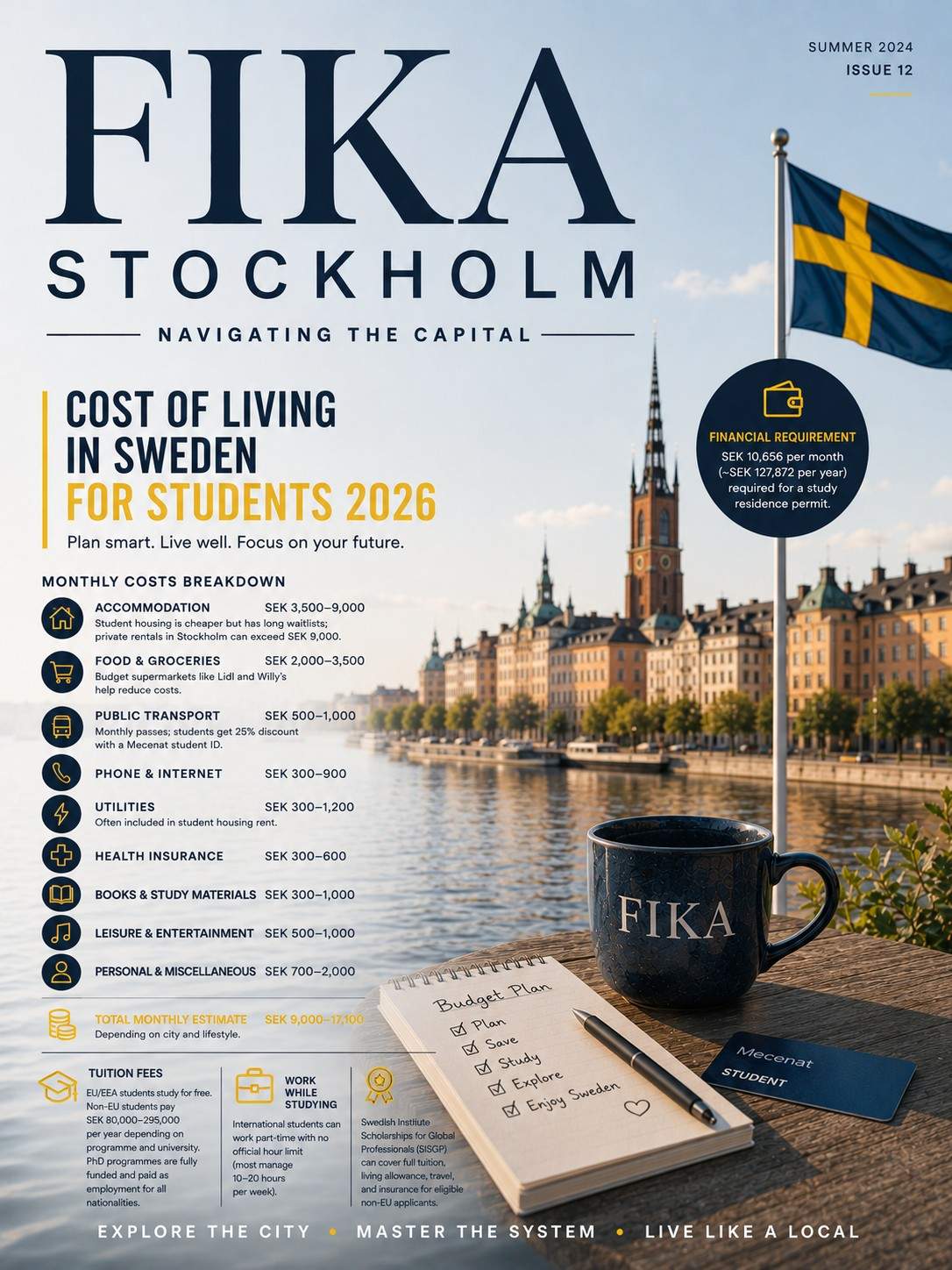 Budgeting tools and student discounts help manage monthly expenses

Working While Studying
To offset costs, international students can work part-time with no official hour limit imposed by Swedish law. Most students manage between 10–20 hours per week alongside their studies. Popular part-time job sectors include:
- ** hospitality and restaurant work
- **Retail and customer service
- **Tutoring (especially in high-demand subjects like maths and programming)
- **Research or teaching assistantships at universities
The Swedish job market is generally welcoming to students who speak English, though learning Swedish significantly improves your options.
Scholarships to Offset Costs
Several scholarship programmes can substantially reduce the financial burden of studying in Sweden:
Swedish Institute Scholarships for Global Professionals (SISGP)
This is one of the most prestigious scholarships available to non-EU students. SISGP covers:
- Full tuition
- Living allowance
- Travel grant
- Health insurance
Eligibility: Open to non-EU/EEA students with strong academic records who demonstrate leadership potential.
University-Specific Scholarships
Many Swedish universities offer their own scholarships for international students, often covering 25%–100% of tuition fees. Check the admissions portal of your specific university.
CSN Loans (for Swedish Residents)
Once you have been granted a study permit and residency, you may become eligible for CSN loans — Swedish government student loans with favourable interest rates. This is particularly relevant for those on longer visa pathways.
How to Budget as a Student in Sweden
Here are practical tips to keep your monthly spending within range:
- Choose cheaper cities: Living in Lund, Uppsala, or Linkoping instead of Stockholm can save you SEK 3,000–5,000 per month
- Use student housing queues: Apply for student housing as early as possible — even before receiving an admission offer
- Shop at budget supermarkets: Lidl, Willys, and Ica Basic are significantly cheaper than Coop or Konsum
- Get a student card: Mecenat cards give 25% off public transport and discounts at hundreds of restaurants and shops
- Buy secondhand: Apps like Blocket and Facebook Marketplace are great for furniture and electronics
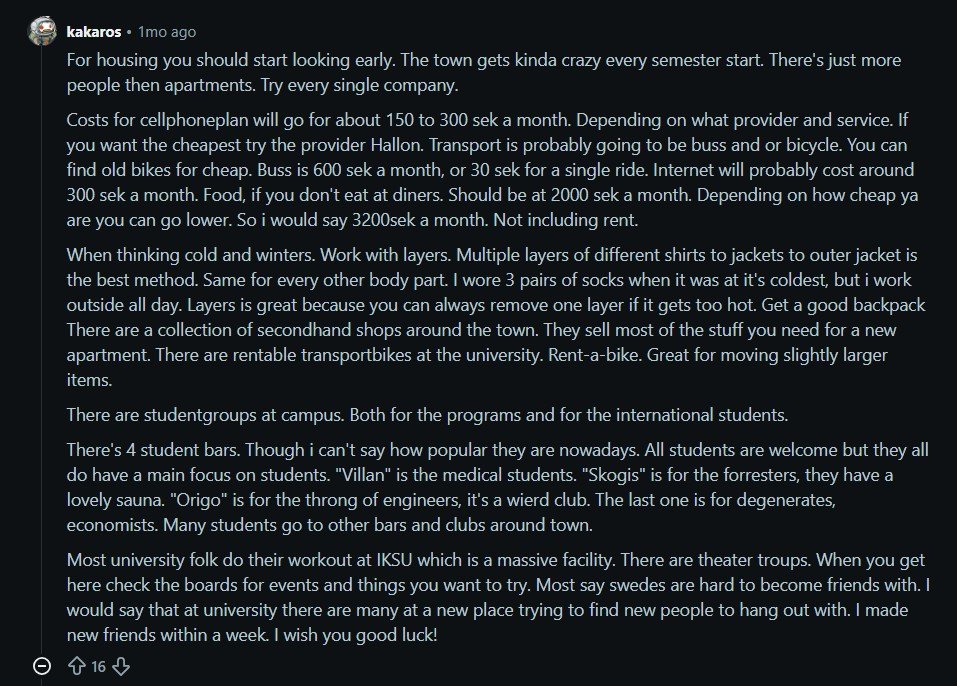 Student experiences from across Sweden on Reddit
Final Thoughts
Sweden offers world-class education, and while the cost of living is notable — especially in Stockholm — it is manageable with early preparation, smart budgeting, and part-time work. EU/EEA students enjoy free tuition, making Sweden one of the most affordable study destinations in Europe for them. Non-EU students can offset costs significantly through scholarships like SISGP or by choosing smaller cities.
Start planning your finances before you arrive, apply for student housing early, and take advantage of the many student discounts available across the country.
Source: MastersPortal – Study in Sweden: Tuition Fees and Living Costs