When we applied for my partner’s family residence permit in Sweden, I realized how high the stakes were. A rejection letter can feel like a wall. The reasons Migrationsverket gives are often buried in legal language and procedural requirements that are easy to miss. Understanding what triggers a rejection before you apply is far better than discovering it after.
💡 Note: This article is based on the author’s personal experience using the services mentioned. Individual experiences may vary.
Migrationsverket carefully reviews each family residence permit application against strict criteria before issuing a decision.
Quick Facts
- Best for: Non-EU citizens applying for or renewing a family residence permit in Sweden
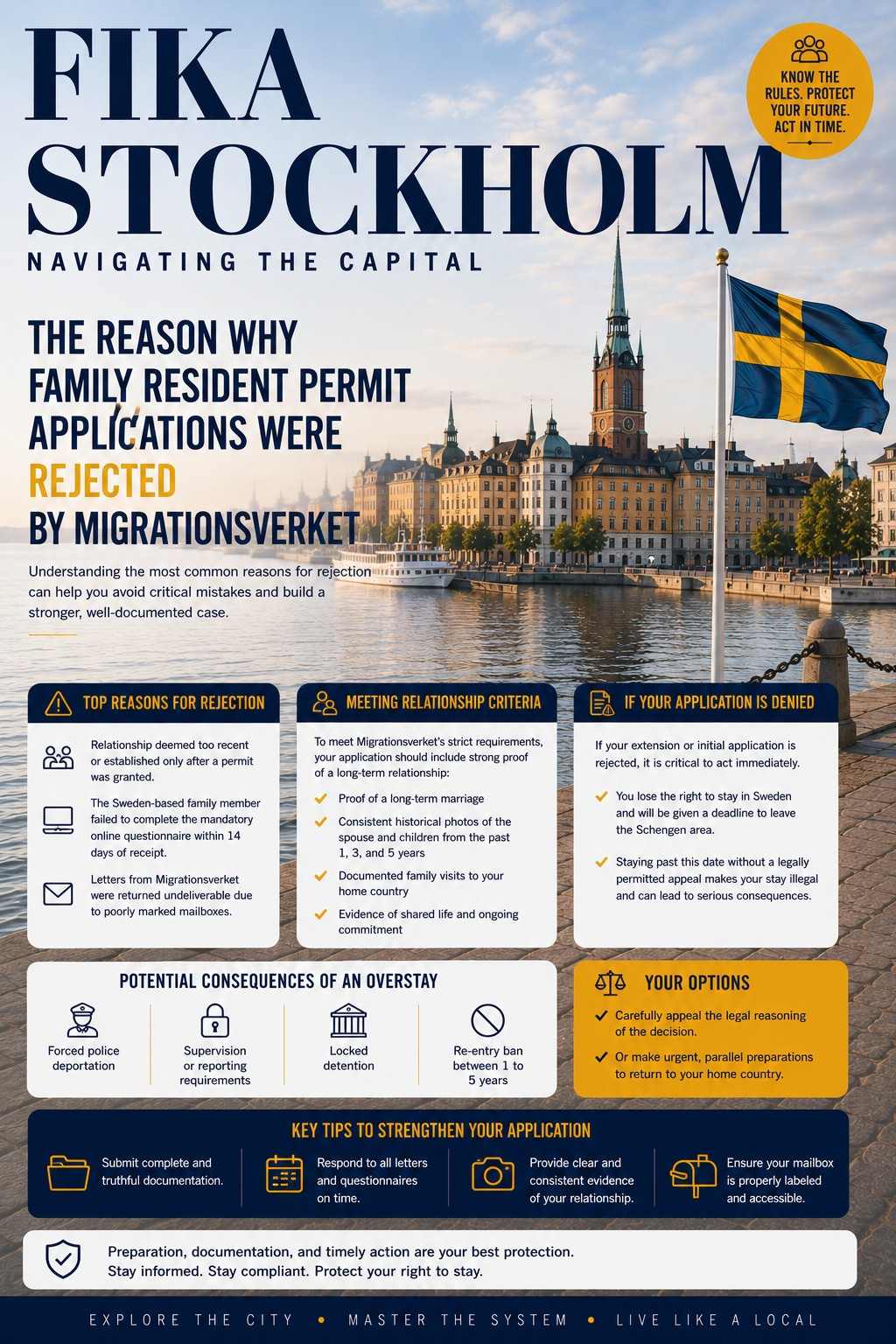
- Most common reason: Relationship deemed too recent or established after permit was granted
- Administrative deadline: 14 days to complete the online questionnaire after receipt
- Consequences of overstaying: Forced deportation, detention, and a re-entry ban of 1 to 5 years
- Appeal window: 3 weeks from the date of decision
1. The Relationship Itself Gets Questioned First
Migrationsverket does not simply take your word that a relationship is genuine. They look at the full picture, and the two most frequent grounds for rejection are:
The relationship is too recent. If the relationship started only a few months before the application, Migrationsverket may question whether it is genuine or entered into primarily to obtain a permit.
The relationship was established after the permit was granted. If the Swedish-based family member received their own permit first and then the relationship began, this creates a red flag. The logic is straightforward: the applicant should have disclosed the relationship from the start if it existed.
To counter this, you need a paper trail that goes back. Migrationsverket generally looks for consistent evidence across three time horizons: the past 1 year, 3 years, and 5 years. Useful documentation includes:
- Photos from different occasions and locations showing the couple and any children together
- Travel records and stamped passports showing visits to the home country
- Correspondence and call logs spanning meaningful periods
- Joint financial records or shared household evidence
The key word is consistency. One photo album from a recent trip will not carry the same weight as documentation that shows the relationship developing over time.
2. Administrative Mistakes That Sink Applications
Even when the relationship is genuine and well-documented, simple administrative failures can kill an application just as fast.
Missing the 14-day questionnaire deadline. After Migrationsverket receives an application, they send a letter with instructions to complete a mandatory online questionnaire. You have exactly 14 days from the date of that letter to respond. If the letter arrives when you are travelling, or if mail delivery is slow, it is easy to miss this window.
Undeliverable mail. If the Sweden-based family member has not set up their mailbox correctly or if the address on file is incorrect, official letters get returned. Migrationsverket interprets non-response as a withdrawn application or grounds for rejection.
Incomplete forms. Every field in the application must be filled out completely. Missing information, even in sections that seem minor, can result in a rejection without further notice.
These are preventable. Double-checking the completeness of every form and monitoring mail closely during the application period are simple steps that make a real difference.

3. What Happens After a Rejection
When Migrationsverket denies an application, the consequences are immediate and serious.
The applicant loses the right to stay in Sweden. A specific deadline is set for leaving the Schengen area. Staying past that date without an active appeal turns the stay into an illegal one.
The risks of overstaying are severe:
- Forced police deportation
- Detention during the removal process
- A re-entry ban lasting between 1 and 5 years, depending on the circumstances
The re-entry ban is particularly consequential. It blocks you from entering Sweden and, in practice, the entire Schengen area during the ban period. This makes it extremely difficult to reconnect with family members who remain in Sweden.
 Thorough documentation of the relationship history is essential when applying for or defending a family residence permit in Sweden.
4. Two Paths Forward After a Rejection
When a rejection arrives, there are two parallel paths to consider at the same time.
Path one: Appeal the decision. The decision letter includes the legal reasoning for the rejection. An appeal must be filed within 3 weeks. The Swedish Migration Court reviews whether Migrationsverket applied the law correctly. If there is a genuine procedural error or if evidence was overlooked, an appeal can succeed.
This path requires careful legal argumentation. It is worth consulting an immigration lawyer before filing.
Path two: Prepare to return. While the appeal is being processed, the deadline to leave may still stand unless a specific injunction is obtained. Making parallel preparations to return to the home country is a practical safeguard in case the appeal is also denied.
Returning voluntarily, even after a rejection, is treated differently from being forcibly removed. It does not automatically eliminate future application options and may reduce the length of a future re-entry ban.
Act Within the Appeal Window
Rejections for family residence permits often come down to two things: whether the relationship passes scrutiny and whether the administrative process was handled correctly. Both are largely preventable with proper preparation. If you are in the middle of an application, check every deadline and every form field today. If you have already received a rejection, act within the 3-week appeal window and consider consulting an immigration lawyer before deciding which path to take.
Source: Migrationsverket official rejection guidance