The Royal palaces in Sweden provide fascinating glimpses into the history of Sweden. If you are picturing a single gilded building behind velvet ropes, the reality is more varied and more interesting than that.
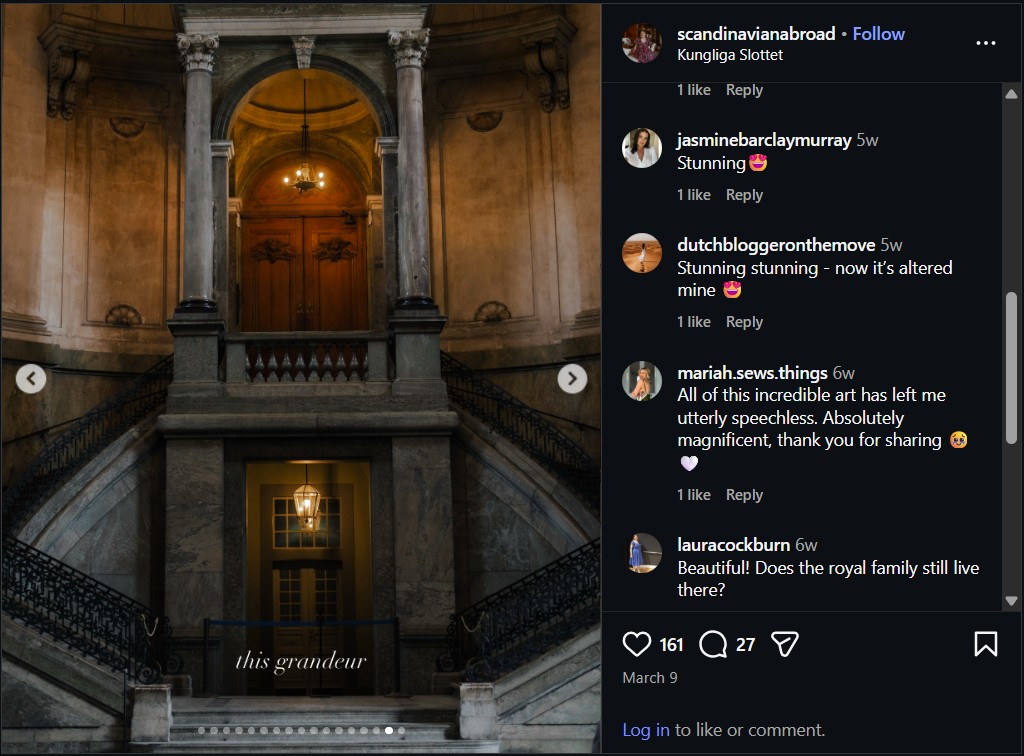
*An evening view of the Royal Palace façade, Gamla Stan, shared via Instagram*
The Royal Palace, Gamla Stan
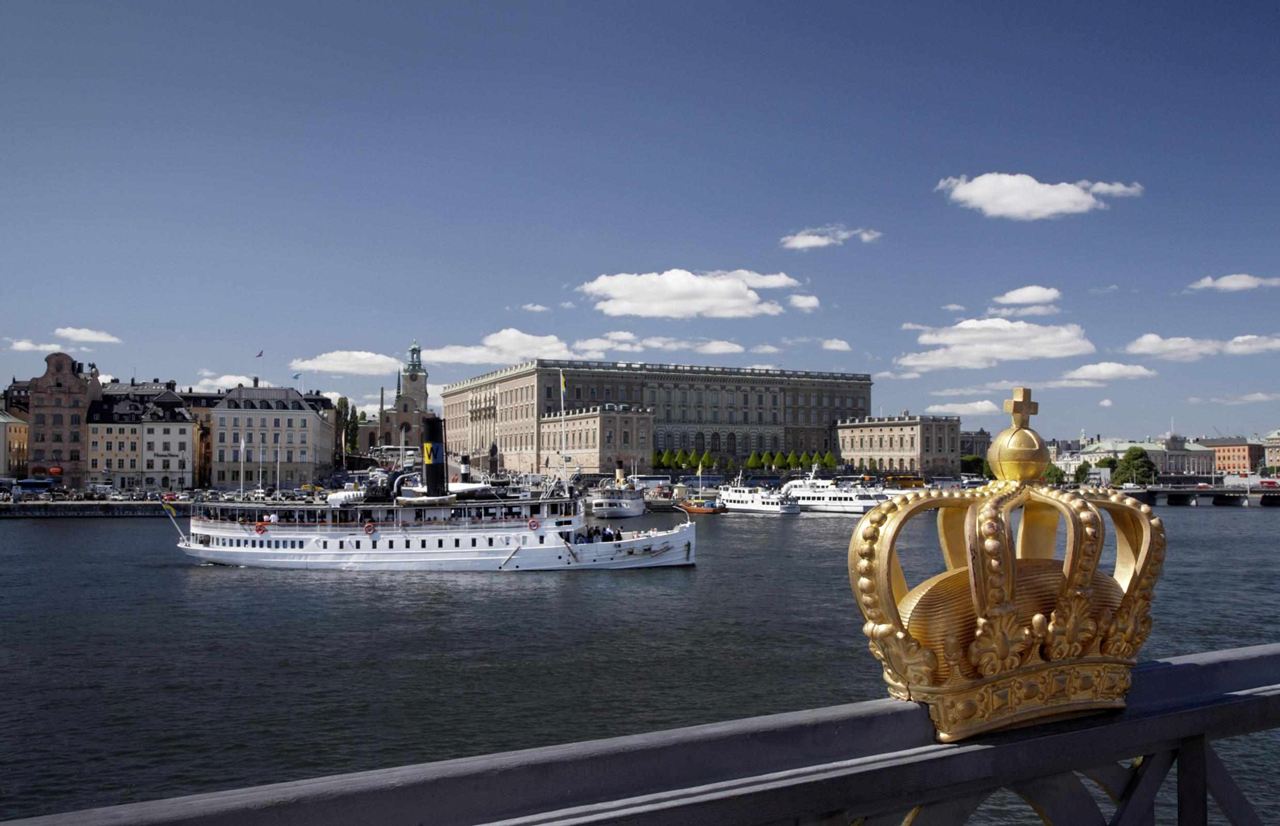
The Royal Palace of Stockholm is His Majesty The King’s official residence and is also the setting for most of the monarchy’s official receptions. If you’re visiting the area, our guide to Gamla Stan covers how to explore the old town beyond the palace itself. The palace is a daily place of work for The King and Queen as well as for the various departments that make up the Royal Court. This is not a museum that happens to have a monarchy. This is a working government building that happens to be open to visitors.
The exterior on Slottsbacken is one of the most photographed views in Stockholm, the pale stone against the sky and the flags flying on a clear day. The changing of the guard happens daily at 12:00 and it draws a crowd. Arrive ten minutes early to get a position near the gate on the right-hand side, you will see more of the ceremony from there.
Inside, the Royal Apartments are worth the entry fee. The Hall of State has a silver throne and a ceiling painted by a Dutch artist whose name is worth knowing if you enjoy 17th-century decorative painting. The Tre Kronor Museum occupies part of the basement where the old castle burned in 1697, and the archaeological traces are genuinely moving in the way old fires always are.
What Is Free and What Is Not
The outer courtyard is open to everyone, no ticket needed. The fortress foundations are visible from outside and from the courtyard, and you can walk around the whole exterior in twenty minutes. The museums inside require separate entry: the Royal Apartments, the Treasury, the Hall of State, and the Gustavo Adolphus exhibition each have their own ticket or combined pass.
If you are selective, the Royal Apartments and the Treasury together take about ninety minutes and cover the range of what the palace offers. Skip the rest unless you have a specific interest in 17th-century portraiture.
Drottningholm Palace
The UNESCO-listed Drottningholm Palace is about 30 minutes by metro and bus from central Stockholm. It is the private residence of the royal family, which means parts of it are closed when the royals are in residence. The palace and gardens are open to visitors when they are not. Check the official schedule before you go, the summer opening hours are longer and the queues reflect it.
The interior is exceptional. The Chinese Pavilion was commissioned by Queen Louisa Ulrika in the 18th century and it is one of the finest examples of Chinoiserie in Europe. Stockholm’s royal palaces are best visited early to avoid the crowds. The gardens are formal and large, designed in the French style, and they extend to the water. Walk to the far end of the garden in summer and you will find a cafe near the boat dock that is easier than it looks from the main palace.
Gripsholm Castle
Further out, in Mariefred southeast of Stockholm, Gripsholm Castle is smaller and quieter. It houses the National Portrait Gallery, which sounds dry but the collection is strong and the building is atmospheric. The town of Mariefred has a small main street with a bakery and a harbour. You can combine the castle visit with a boat ride on lake Malaren in summer, which makes the journey part of the experience rather than an inconvenience.
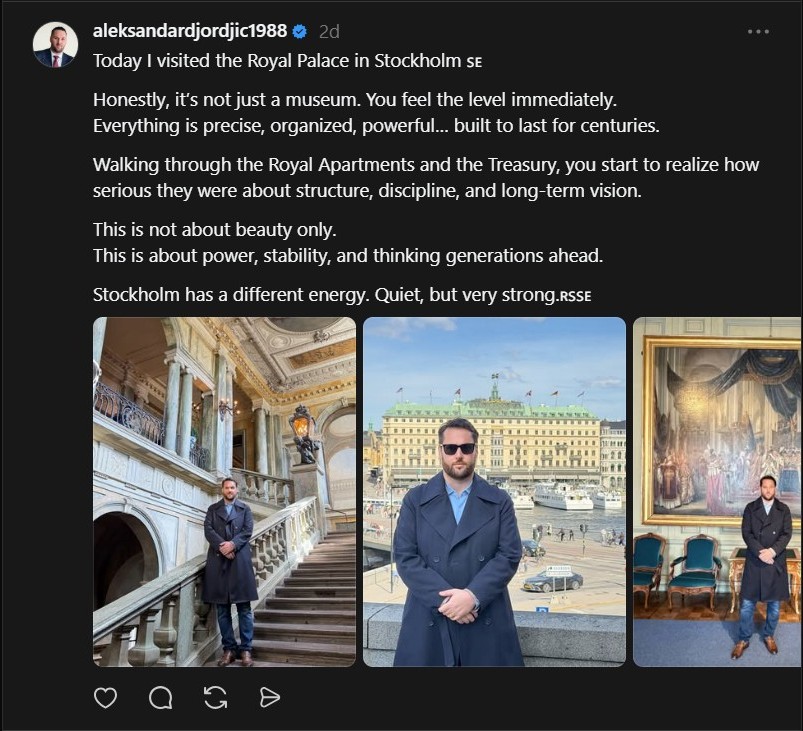
*An evening view of the Royal Palace façade, Gamla Stan, shared via Threads*
Closing Thought
Stockholm’s royal sites reward people who read the schedule before they go. The changing guard is free to watch. The palace courtyard is free to enter. The interiors that require tickets are worth paying for, particularly Drottningholm and the Treasury. Go early in the day when the light inside is better and the tour groups have not yet filled the rooms.