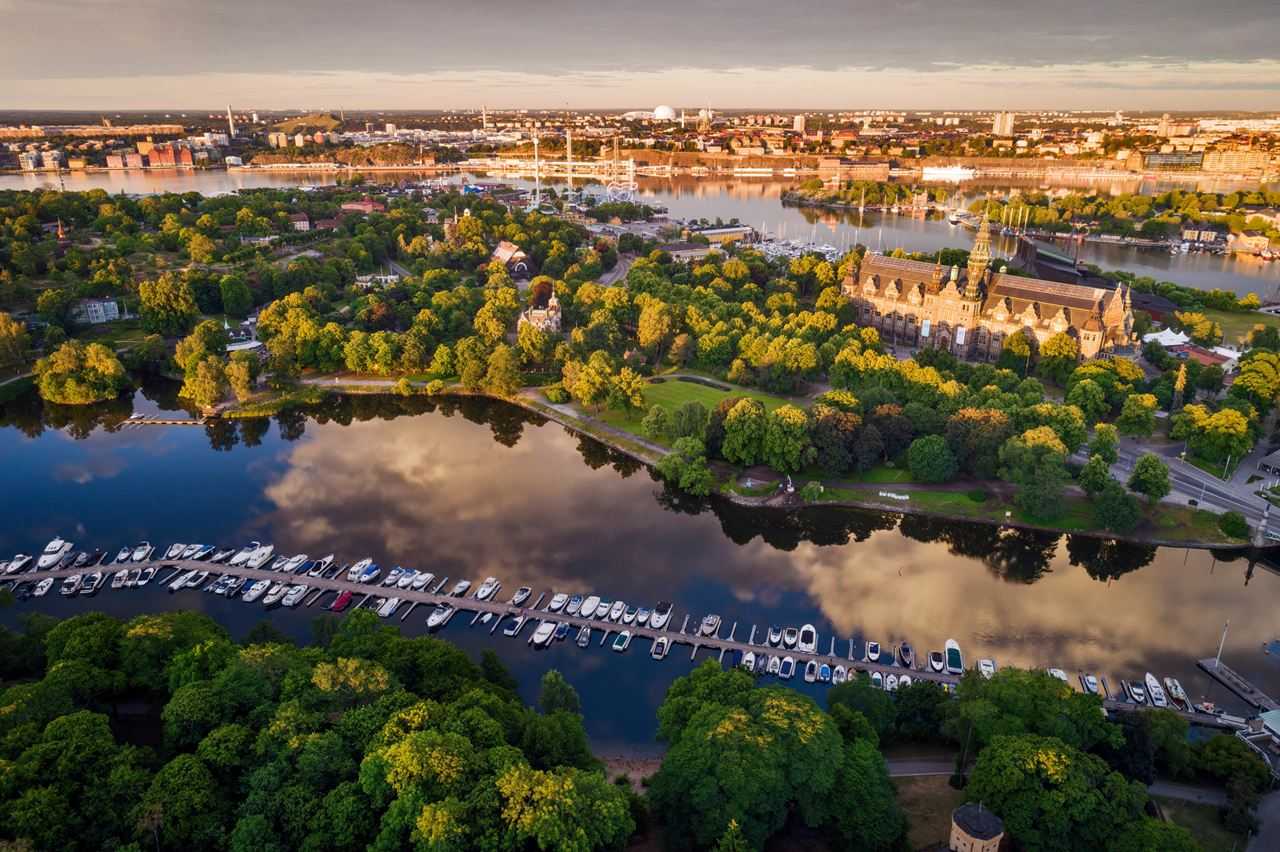
Stockholm spreads across 14 islands and 57 bridges, and once you know that, everything about the city starts making sense. The way neighborhoods feel separate yet connected, how a ten-minute ferry ride drops you from a financial district into a woodland island, why the light hits differently depending on which bridge you’re standing on.
Getting Around Without Getting Stressed
The tunnelbana is the backbone, but don’t sleep on the ferries. Our sightseeing like a local guide covers how to use public transport as the best way to see the city. Several archipelago routes run as regular public transport, which means you can commute to work on a boat in the morning and take a sunset cruise in the evening without switching systems. A single SL card covers most of it. If you’re walking, Gamla Stan, Södermalm, and Djurgården are all manageable on foot, and Stockholm is genuinely one of the more walkable capitals in Europe.
What You Actually Come Here For
The museums are not a joke. The Vasa Museum, built around a salvaged 16th-century warship that sank on its maiden voyage, consistently ranks among the most visited historical attractions in the world for good reason. See our Vasa Museum and Skansen guide for how to plan your visit. The ship is enormous and the story is absurd in a way that feels almost invented. culture and museums guide offers institutions like Fotografiska and the Moderna Museet that both demand at least half a day each if you’re paying attention. Waldemarsudde, the former home of Prince Eugen, has one of the more surprising art collections in the city given its small footprint.
The food scene has shifted significantly over the last decade. Modern Swedish cuisine moved out of the fine-dining bubble and into more casual settings, but the old standards still hold. A proper smörgåstårta is worth trying at least once, preferably somewhere unpretentious. For coffee and pastry, the best fika spots here is serious without taking itself too seriously, which is a harder balance than it sounds.
The Thing That Makes It Stick
Stockholm has a particular quality of light in winter and a particular quality of informality in summer, and both are worth planning around. December darkness makes the candlelit fika culture feel essential rather than aesthetic. Midsummer, everything moves outside, including meals, meetings, and apparently entire families onto any patch of grass with sun. Neither extreme is simulated. You feel the city shaped by its climate in ways that go beyond the obvious.
The inclusiveness thing is not marketing. There is a genuine social contract here that shows up in small ways, transit accessibility being one of the more practical examples. You notice.
Worth Seeing
*Stockholm is built on 14 islands connected by 57 bridges, and the proximity to water is present in every neighborhood, even the ones that feel landlocked.*
Getting There
Arlanda Express is the fastest rail link from the airport, about 20 minutes to central Stockholm. See our guide to buying SL tickets for getting around the city once you’re there. Flygbussarna is cheaper. If you’re coming from elsewhere in Scandinavia, the overnight ferry from Helsinki or Turku is one of the more civilized ways to arrive in the country.
Closing Thought
If you go once, go in late autumn when the crowds thin and the islands feel like they belong to the people who live there year-round. The light is brief and strange and worth every minute of it.