The Stockholm Metro is one gigantic art gallery. More than 90 of the 100 stations feature artworks created by some 150 artists. That is not a marketing line, it is a fact you can verify by buying a metro ticket and riding any line long enough.
How It Started
The art programme began in the 1950s as Stockholm was expanding its metro system. Rather than treating the underground stations as purely functional infrastructure, the city commissioned artists to work with the architects from the start. This made Stockholm’s metro unusual from the beginning and the programme has continued with new installations added to this day.
Notable Stations
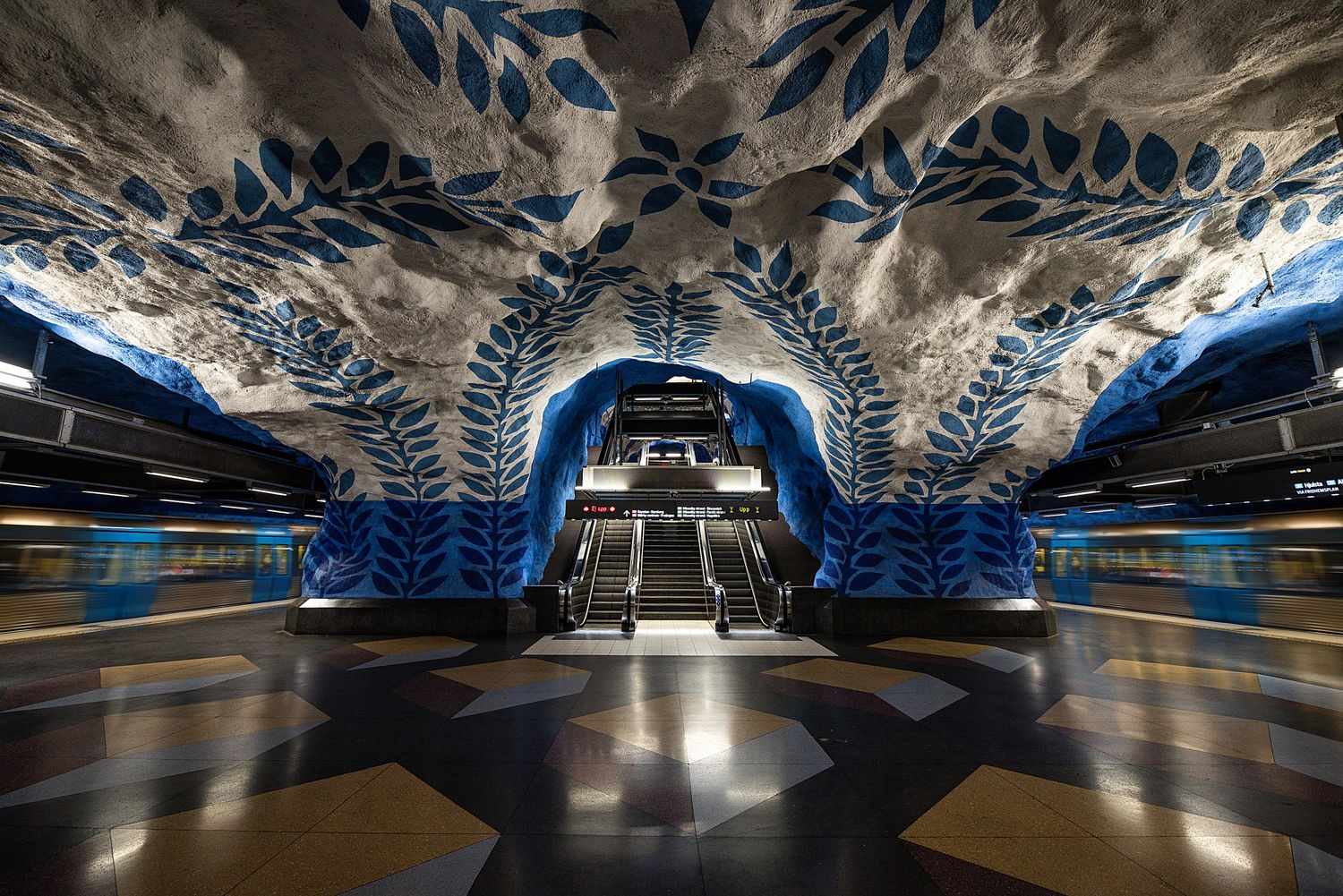
T-Centralen is where most visitors encounter the metro art first. The station is the system’s busiest interchange and the art reflects that, large-scale work in blue and white that works with the architecture rather than against it.
Stadion has a rainbow arch that appears as you move through the platform. It was installed for Stockholm Pride and has become one of the most photographed spots in the metro system. The location on the red line means it sees a lot of tourist traffic, which is presumably the point.
Solna centrum is one of the most dramatic. The entire station is painted in deep red and green, with cavern walls left raw and treated as part of the composition. It was created during a period when there was significant political tension around environmental and labour issues in Sweden, the artist, Anders Åberg, made that tension visible in the palette. If you’re visiting from the airport, this line connects you directly to the city, see our sightseeing like a local guide for more on using Stockholm’s transit system.
Fridhamsplan and Västra Skogen have geometric and architectural treatments respectively. Both reward slowing down and looking at the ceiling rather than your phone.
Rådhuset on the blue line has exposed rock formations integrated into the design, the metro was built through solid rock and the artists worked with what was there rather than covering it.

The Blue Line
The blue line tends to have the most ambitious individual installations. Several stations were designed with the artists involved from the early planning stages, which meant they could influence the architecture rather than decorating it afterward. The result is work that feels integrated rather than applied.
How to Ride It as an Art Gallery
Take the metro without a destination. Ride the green line end to end, get off at every other station, and walk the platforms. Bring a camera, the lighting underground is challenging but the results can be striking.
If you prefer structure, several companies run metro art tours with guides who know the history and context of individual installations. These are worth it if you want the background that a casual ride will not give you. The broader culture and museums guide beyond the metro stations includes museums and galleries that pair well with a day of underground exploration.
Practical Notes
The metro runs from about 05:00 to 01:00 daily with reduced night service on weekends. A single ticket or day pass covers all lines. The SL app handles ticketing cleanly. Photography is permitted throughout, tripods are technically not allowed during peak hours but are generally tolerated outside them.
The art is there whether you look for it or not. Most Stockholm residents walk past it every day without comment, which is probably the right relationship to have with a public gallery. For more on getting around the city, see our guide to buying SL tickets.