When we started preparing for our family reunification in Sweden, I realized how much structure and preparation it takes. Whether you are bringing a spouse, partner, or family member to Sweden, understanding the requirements from the start saves time, frustration, and costly re-applications.
💡 Note: This article is based on the author’s personal experience using the services mentioned. Individual experiences may vary.
Family reunification allows eligible residents in Sweden to bring close family members to the country.
Quick Facts
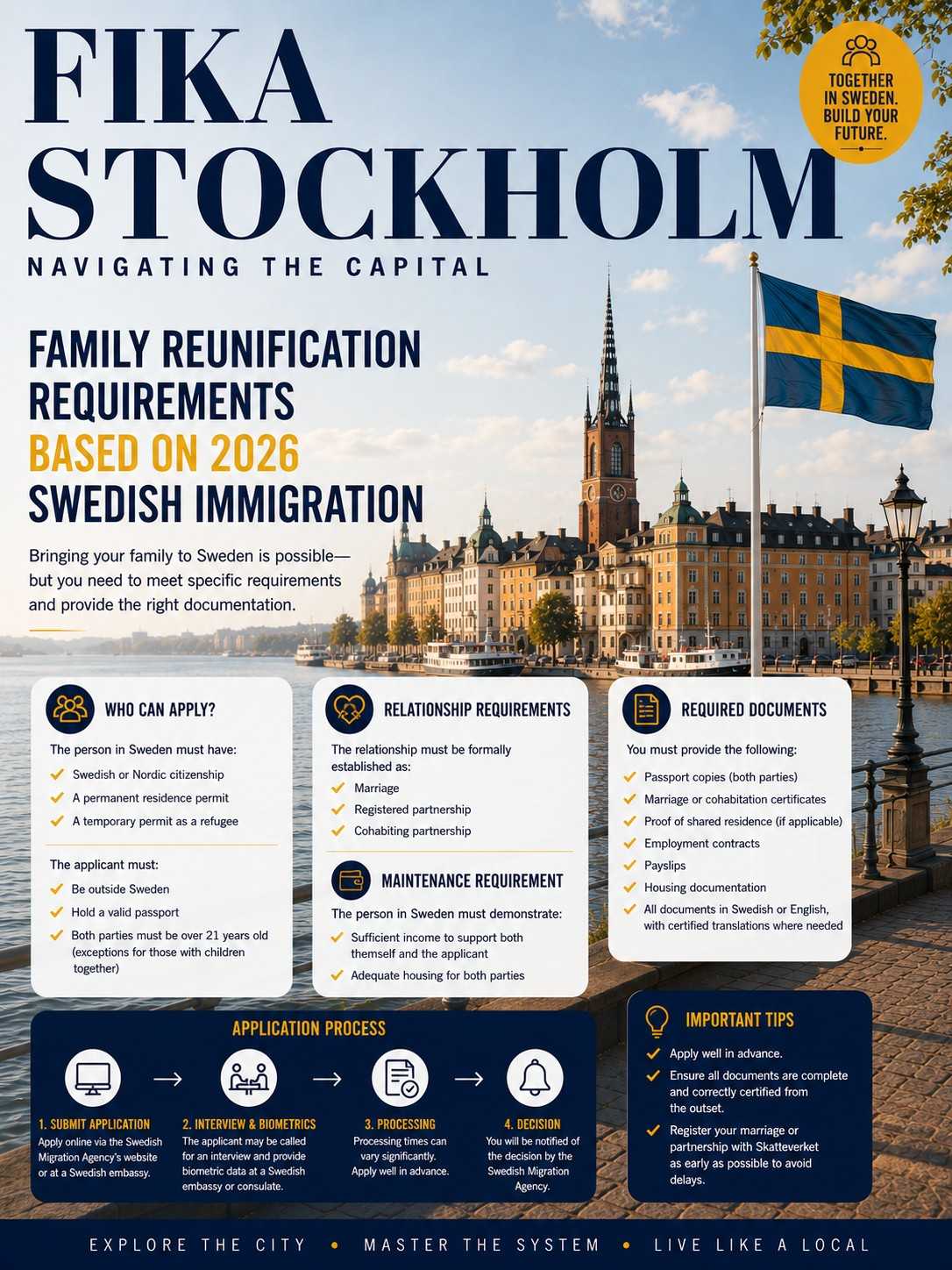
- Sponsor must hold: Swedish or Nordic citizenship, permanent residence permit, or temporary permit as a refugee
- Applicant must be: Located outside Sweden, hold a valid passport, and be over 21 years old (with exceptions for those with children together)
- Relationship types accepted: Marriage, registered partnership, cohabiting partnership
- Key requirement: Sponsor must meet maintenance requirement (income and housing)
- Application route: Online via Swedish Migration Agency or at a Swedish embassy
- Processing times: Variable - apply well in advance
1. Who Can Sponsor a Family Member
The person already living in Sweden (the sponsor) must fall into one of three categories:
Swedish or Nordic citizenship grants the most straightforward pathway. Citizens can bring family members without additional permit requirements.
Permanent residence permit holders also qualify, which includes most long-term residents who have established their status through work, study, or other legal residence.
Temporary permit as a refugee allows family reunification, though the process and timelines differ from standard work or study permit routes.
If your current immigration status does not fit one of these categories, family reunification may not be available through the standard process. Check your status with the Swedish Migration Agency before proceeding.
2. Applicant Requirements
The person applying to join their family in Sweden (the applicant) must meet these baseline conditions:
Located outside Sweden at the time of application. Applications submitted from within Sweden follow different procedures and are generally only available for family members of Swedish citizens.
Valid passport that covers the entire expected processing period. Passports close to expiration frequently cause complications.
Age over 21 is required for partner applications. Exceptions exist for applicants who already have children together with the sponsor.
Relationship must be formally established as a marriage, registered partnership, or cohabiting partnership. The definition of cohabiting partnership matters here - Swedish authorities have specific criteria for what qualifies, and informal long-term partnerships may not meet the threshold without formal documentation.
 The Swedish Migration Agency is the primary authority for all family reunification applications in Sweden.
3. The Maintenance Requirement
This is the most critical requirement and the one that catches many sponsors off guard. The sponsor must demonstrate two things:
Sufficient income to support both themselves and the applicant without recourse to Swedish public benefits. This means your employment income, business income, or other financial resources must cover living expenses for the entire household. The specific threshold changes annually, so verify the current figure directly with the Migration Agency.
Adequate housing for both the sponsor and the applicant. This means having a lease or ownership documentation showing sufficient space for the number of people in the household, meeting Swedish housing standards for occupancy.
Both conditions must be met simultaneously. A high income does not compensate for inadequate housing, and spacious housing does not compensate for insufficient income.
4. Required Documents
Document preparation is where most applications slow down. Submitting complete and correctly certified documentation from the outset prevents delays. The standard document list includes:
Identity documents: Passport copies for both the sponsor and applicant, certified copies where requested.
Relationship documentation: Marriage certificate, registered partnership certificate, or cohabitation agreement. Any document not originally issued in Swedish or English requires a certified translation.
Proof of shared residence where applicable: rental agreements, utility bills, or other documentation showing both parties at the same address.
Financial documentation: Employment contract, recent payslips (typically the last three to six months), and tax assessments. Self-employed sponsors need audited financial statements.
Housing documentation: Lease agreement, ownership documents, or a letter from the landlord confirming the right to accommodate additional occupants.
All translations must be certified by an authorised translator. Sworn translations submitted to Swedish authorities carry specific requirements - verify what is accepted before submitting.
5. Application Process Step by Step
The process follows a defined sequence:
Step 1 - Prepare documentation: Gather and certify all required documents before starting the online application. This is the most time-consuming step and the most common source of delays.
Step 2 - Submit online: Apply through the Swedish Migration Agency website. Create an account, complete the application forms, and upload all documentation. Alternatively, submit in person at a Swedish embassy or consulate in the applicant’s country of residence.
Step 3 - Attend appointment: The applicant will be called for an interview and biometric data collection at a Swedish embassy or consulate. Preparation for the interview is important - officers will ask about the relationship, living plans, and financial circumstances.
Step 4 - Wait for processing: Processing times vary significantly based on application volume, time of year, and complexity of the case. Current estimates should be checked directly on the Migration Agency website.
Step 5 - Decision and registration: If approved, the applicant receives a residence permit card. Upon arrival in Sweden, the first priority is registering with Skatteverket to obtain a personnummer.
6. Practical Tips to Avoid Common Delays
These points come up repeatedly in the experience of those who have navigated the process:
Apply well in advance. Processing times can stretch to several months. Starting the process early removes pressure and allows for unexpected delays in document collection or translation.
Ensure all documents are complete and correctly certified from the outset. Incomplete applications are the most common reason for delays. Missing translations, unsigned documents, or expired certifications will send the application back to the beginning.
Register your marriage or partnership with Skatteverket as early as possible. A registered partnership or recognised cohabiting relationship that predates the application strengthens the case and removes ambiguity about the relationship status.
Keep copies of everything you submit. Communication records, application receipts, and uploaded documents are invaluable if there are questions about what was received.

Focus on Complete Documentation
Family reunification in Sweden is well-structured but demanding. The maintenance requirement and document certification process are the two biggest hurdles. Start preparation early, verify current thresholds with the Migration Agency, and treat every document submission as if the officer will scrutinise it closely. Successful applications share one common trait: applicants who read the requirements carefully and followed them completely.
Source: Swedish Migration Agency - Family Reunification